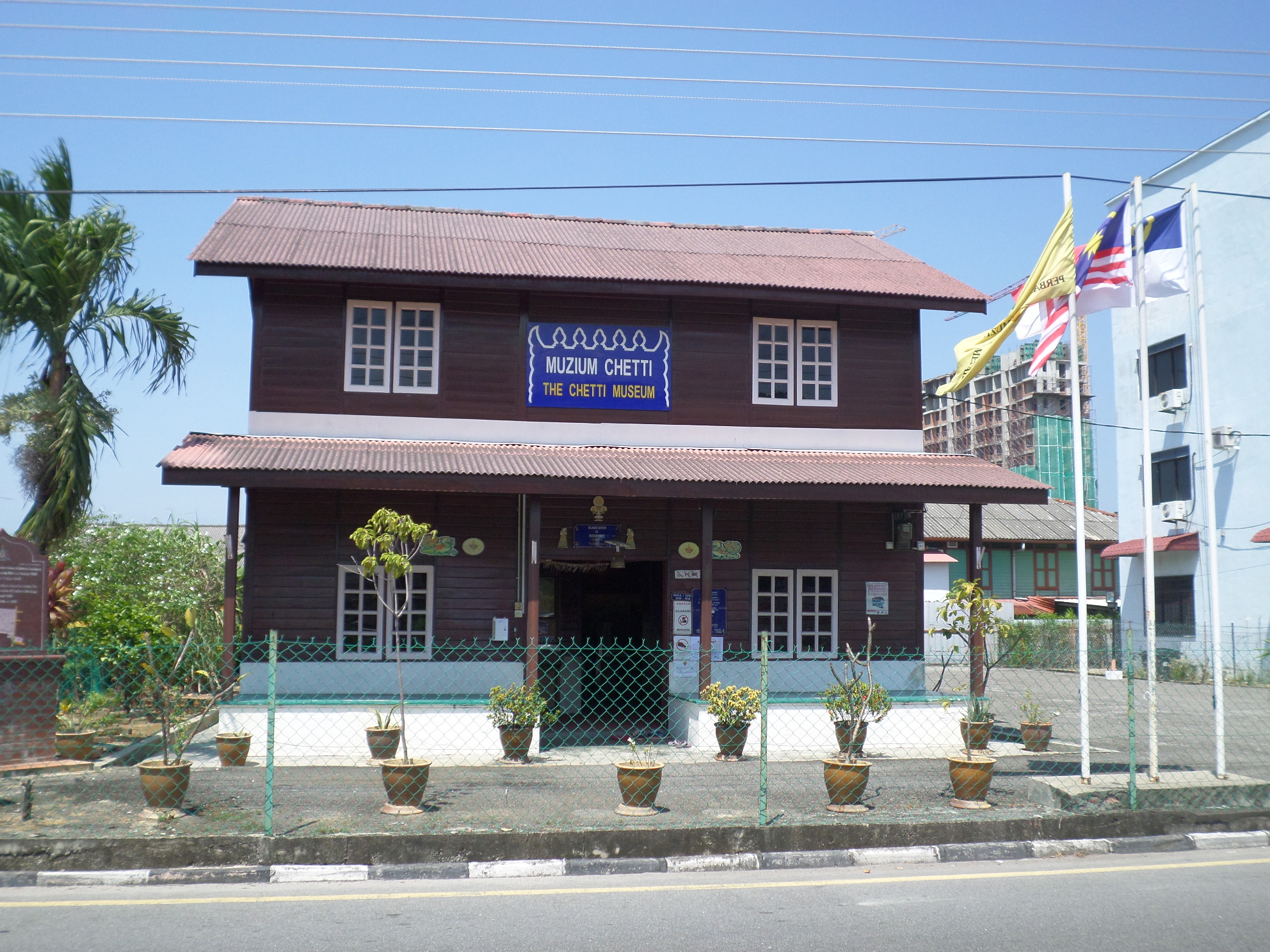
Chongkian, 1 February 2015, CC BY-SA 4.0. Original JPEG retained, shown full frame. Historical facade, not current opening or collection.
Peranakan is a wider story than one familiar image
If the word Peranakan immediately brings a Baba-Nyonya house to mind, Melaka has a useful surprise. Singapore's Peranakan Museum describes several Peranakan communities, including Chetti Melakans, or Peranakan Indians. The Chitty Museum—also written Muzium Chetti—sits within the Chitty settlement at Gajah Berang. It gives a city visit another cultural thread without asking you to treat different communities as interchangeable versions of the same costume or cuisine.
When asking for a quote
Send hotel, passengers, luggage and return timing together
Complete details make it easier to check vehicle fit, rest stops and timing without unnecessary back-and-forth.
Start with the ordinary things people needed
Melaka's official tourism listing identifies religious and wedding accessories, cooking tools and costumes among the museum's subjects. That is a good scale for a first visit: a household object can open a more approachable conversation than a long historical timeline. Choose one object whose use interests you, read its label, then ask what it tells you about work, celebration or family life. Do not assign a ritual meaning from its shape alone. The display's own explanation matters more than a resemblance to something you have seen elsewhere.
A food connection you can explore after the visit
The Peranakan Museum's digital resources include Tanya Pillay-Nair's Chitty Melakan pindang story. It describes a family seafood dish built around a spice paste and explains that her version boils the rempah rather than frying it. Read it as one household's account, not a universal rule for every Chetti kitchen. It offers a concrete question to take home: how can familiar ingredients produce a family tradition of their own? The recipe is a separate reading resource; this article does not imply that the Melaka museum serves a meal or runs a cooking class.
Compare without turning heritage into a competition
If you have already visited the Baba & Nyonya Heritage Museum, use the difference to widen your questions. Which community is telling the story? Is the emphasis on a particular family home, a shared community practice or a trading connection? Our earlier museum guide introduces a Chinese Peranakan household and Cheng Ho's maritime world; this guide concerns the Chetti community. One visit need not replace the others, but a second museum is more worthwhile when you know what new question you are bringing.
The settlement is still a place where people live
Gajah Berang is not simply a decorative extension of a museum. Keep to public visitor areas, ask before photographing people or private homes, and follow any local guidance around religious spaces. For a family outing, let each person bring back one new word or one object they can explain, rather than requiring everyone to read every panel. If mobility, seating or language support affects your visit, ask for the current arrangements before leaving your accommodation.
Practical starting point for your Melaka day
The official tourism listing places the museum in the Chitty settlement at Gajah Berang and publishes 9am–5.30pm, closed Monday, with telephone 06-283 0925. Treat that as published guidance, checked on 20 October 2026, and reconfirm holidays, access and admission before a special trip. Save the actual museum map pin rather than another similarly named attraction. Arrange any Singapore–Melaka journey and local waiting separately through our route page; this cultural guide is not a museum booking or an account of a personal visit.
