
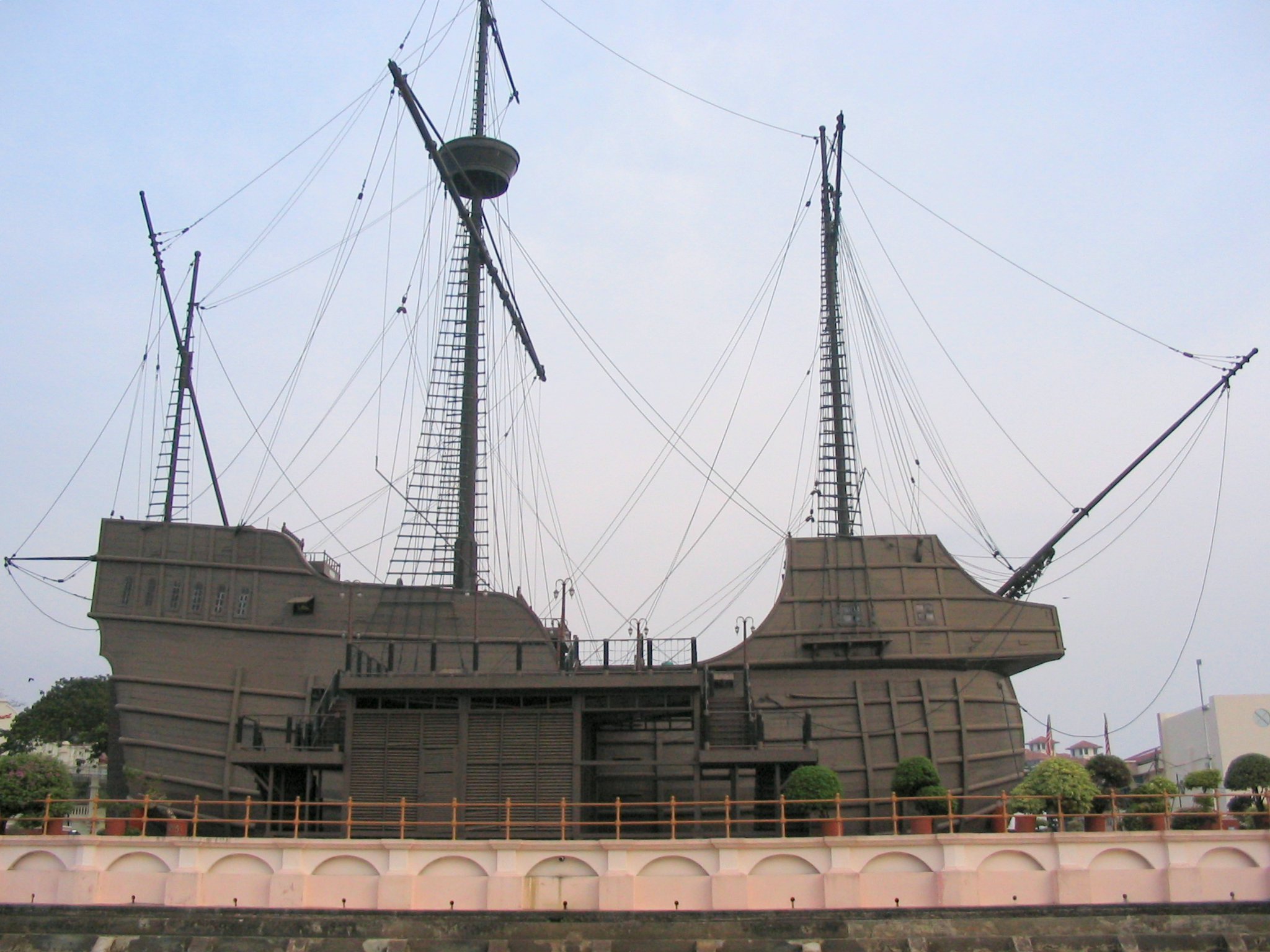
Historical exterior photographed by Felix Andrews (Floybix), 27 January 2006. CC BY-SA 3.0; original photo unchanged, responsive display crop only. Not a current-condition or interior photograph.
First, meet the right ship
PERZIM identifies this landmark on Jalan Quayside as a replica of Flor de La Mar, used to present Melaka's maritime and trading history. It is not a recovered original ship and not the river-cruise boat you board for sightseeing. The museum operator lists old maps, ship models, paintings and objects connected with maritime trade.
That distinction changes the visit. You are entering a place that tells a story, not inspecting a surviving sixteenth-century vessel. Read dates and labels carefully so the replica, the historical ship and the things on display do not blur into one imagined object.
When asking for a quote
Send hotel, passengers, luggage and return timing together
Complete details make it easier to check vehicle fit, rest stops and timing without unnecessary back-and-forth.
One map: look for a connection, not every place name
Our first suggestion is to spend a little longer with one map. Notice its date, what area it shows and which places the accompanying label connects. Is the display explaining a route, a port or a changing view of the coast? Let the caption answer before filling the gaps with a story you have heard elsewhere.
With a companion, choose one connection each and explain why it caught your attention. The aim is not to reconstruct a voyage from memory. It is to see that the city outside belonged to a wider world. If a map is difficult to read, another clearly explained display is a perfectly good starting point.
One model: ask what the shape helps you understand
A model gives the eye a different task. Compare its overall shape with the vessel named on the label, then ask what the display actually tells you about its use. Resist assigning a function to every rope, opening or deck simply because it looks familiar. Scale models can help an explanation, but they are not all evidence of the same period or purpose.
For children, make this a small noticing game: each person points out one detail, then checks whether the explanation addresses it. Adults can join without turning it into a quiz. This is a suggested way to visit, not a museum-run activity or a promise about a particular model currently on show.
One object: imagine the journey, then check the label
For the third stop, choose one trade-related object with a readable explanation. Ask what it is, where the museum says it came from and why it belongs in this story. An ordinary-looking item can be more memorable than a dramatic display when you understand the question it answers.
Keep imagination and evidence separate. You can wonder who might have handled an object without claiming it belonged to a named sailor or famous voyage. The most enjoyable museum conversations often start with 'I had never thought about that' rather than an impressive-sounding fact.
Which Melaka museum fits this afternoon?
Choose Samudera when the ship-shaped landmark and the port-trade story are what interest you. Our separate guide to Baba & Nyonya and Cheng Ho looks at a family home and cultural-exchange themes; the submarine guide concerns a different vessel at Klebang. They need not become one compulsory museum circuit.
After one attentive visit, a meal and an unhurried wander may be enough. Before fixing the day, check the operator's latest admission, opening and access arrangements. Ask directly about stairs or mobility needs; neither the exterior photo nor this guide proves step-free access. The photograph is dated 2006 and is used to identify the landmark, not show today's condition.
Let transport follow the discovery
For a Singapore–Melaka quotation, send the actual pickup, hotel or museum destination, dates, return plan, passenger and luggage numbers, child or mobility needs, and any stops or waiting. The coordinator can then review vehicle fit and the scope of the journey. Border queues and city traffic make a guaranteed arrival time inappropriate; keep breathing space around admission plans.
Museum tickets and guiding are separate unless specifically agreed. Name Muzium Samudera on Jalan Quayside, and confirm a practical meeting point rather than assuming the museum entrance is a vehicle bay. Choose the story first; arrange the transfer around a trip you will actually enjoy.